Composite bonding in Brussels: what to expect
Composite bonding in Brussels: who it suits, how the appointment goes, how long it lasts, typical costs in Belgium and how it compares with porcelain veneers.

Dr Denis Cataraudentist in Etterbeek
Published 7 min read
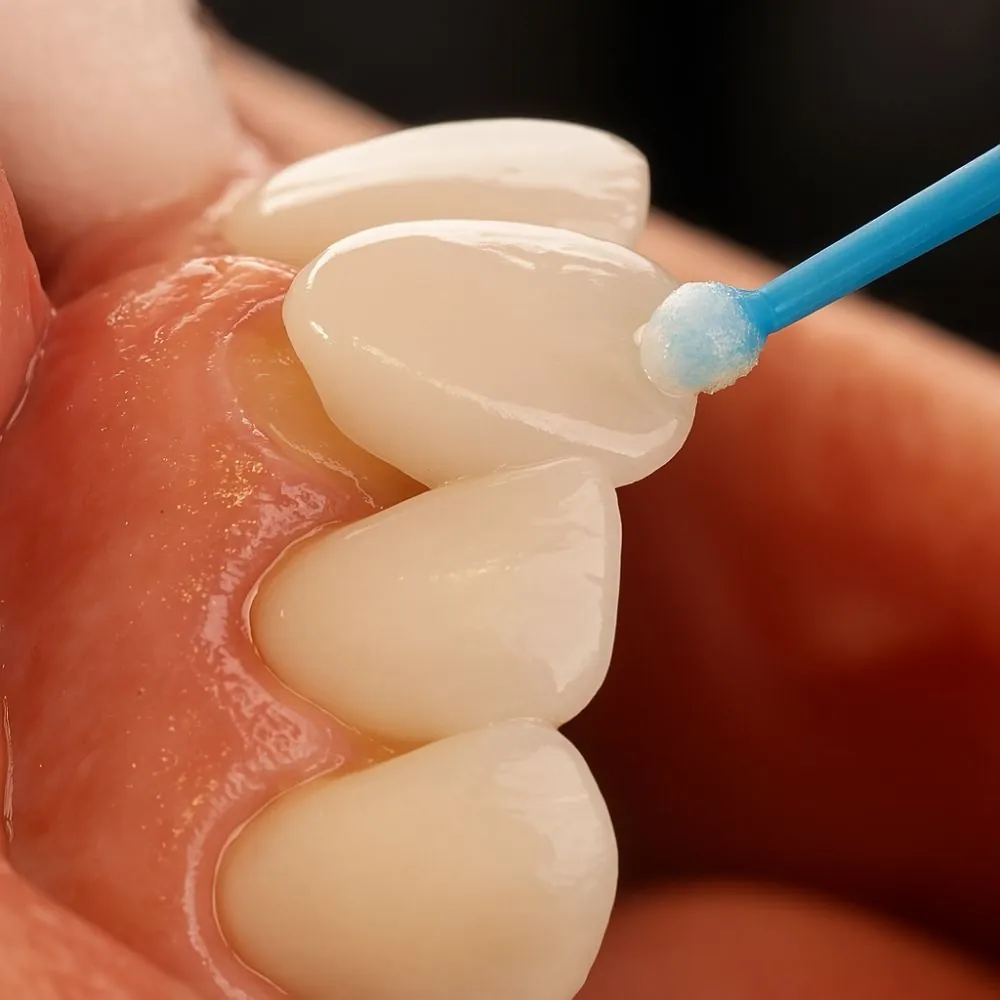
Composite bonding is a cosmetic treatment in which tooth-coloured resin is applied directly to your teeth and sculpted to close small gaps, repair chips or improve their shape and colour. It is usually done in a single appointment, often with little or no drilling, and typically lasts around 5 to 7 years with good care. In Belgium it generally costs around €250-500 per tooth.
Here is what to expect, from the first consultation to looking after your bonded teeth, and how bonding compares with porcelain veneers.
What is composite bonding?
Composite is a resin filled with fine ceramic particles, available in many shades that match natural enamel. In bonding, the dentist applies it directly to the tooth, shapes it by hand and hardens it with a curing light. Because nothing is made in a laboratory, the result is visible at the end of the appointment. The same material is used for tooth-coloured fillings; what changes here is the aim, which is mainly aesthetic.
Who is composite bonding suitable for?
Bonding works well for:
- small gaps between the front teeth;
- chipped or worn edges;
- teeth that are slightly short, narrow or uneven in shape;
- small marks or discoloured areas on the enamel.
It is less suitable, or needs careful planning, when:
- teeth are markedly crooked or the bite is significantly out of line, where alignment treatment may be the better first step;
- a tooth is very dark, for example after root canal treatment, where porcelain or a crown may mask it better;
- you grind your teeth heavily, which can chip composite (a night guard is then often recommended);
- there is active decay or gum disease, which must be treated first.
What happens during the appointment?
- 1
Consultation and planning
The dentist checks the health of your teeth and gums, discusses what you would like to change, takes photos and chooses the composite shade with you.
- 2
Preparation of the tooth surface
The teeth are cleaned, the surface is lightly conditioned and a bonding agent is applied. In most cases no drilling and no injection are needed.
- 3
Layering and sculpting
The composite is applied in thin layers and shaped by hand, each layer being hardened with a curing light.
- 4
Finishing, polishing and bite check
The teeth are refined, polished to a natural shine and checked when you bite, so the new edges feel comfortable.
Does composite bonding hurt or damage your teeth?
Bonding is usually painless: most of the time the enamel is not drilled, so no local anaesthetic is needed. The tooth is only lightly conditioned so the composite can adhere. This is the main advantage over porcelain veneers, which normally require a thin layer of enamel to be removed. Some patients notice slight sensitivity for a day or two, which settles on its own.
How long does composite bonding last?
With good care, bonding typically lasts around 5 to 7 years. Over time the composite can lose some shine or pick up stains, especially from coffee, tea, red wine and smoking, and edges can chip. Unlike porcelain, it can usually be polished or repaired in the chair without starting again. A check-up and a professional polish once or twice a year help it stay looking fresh.
How much does composite bonding cost in Brussels?
In Belgium, composite bonding or composite veneers generally cost around €250-500 per tooth, depending on how much of the tooth is covered and how complex the shaping is. Porcelain veneers are typically around €800-1,500 per tooth. As a cosmetic treatment, bonding is not reimbursed by Belgian statutory health insurance; private policies rarely contribute. At the practice, fees are given as a written quote after the consultation.
Composite bonding or porcelain veneers?
| Composite bonding | Porcelain veneers | |
|---|---|---|
| Typical price per tooth | €250-500 | €800-1,500 |
| Tooth preparation | None or minimal | Thin layer of enamel removed |
| Appointments | Usually 1 | 2 to 3 over 2-3 weeks |
| Typical lifespan | Around 5-7 years | Often 10-15 years or more |
| Colour stability | Can stain; can be polished | Very stable |
| Repairs | Simple, in the chair | Veneer usually replaced |
Bonding is often a good first step: conservative, quick and adjustable. Porcelain is worth considering when you want the most durable, colour-stable result on several teeth. More on our dental veneers page.
How should you look after bonded teeth?
- brush twice a day with a soft brush and a non-abrasive toothpaste, and clean between your teeth daily;
- go easy on coffee, tea, red wine and tobacco, or rinse with water afterwards;
- avoid biting nails, pens, ice or opening packets with your teeth;
- wear a night guard if you grind your teeth;
- keep regular check-ups so small chips or stains can be polished early.
Composite bonding in Etterbeek
Dr Denis Catarau, a dentist with a focus on cosmetic and implant dentistry, provides composite bonding at the dental practice at Rue des Champs 64, 1040 Etterbeek, near La Chasse, Monday to Friday from 9:00 to 18:00. Consultations are held in French, Romanian or Russian. At the first appointment, he checks the health of your teeth and gums, discusses what you would like to change and explains whether bonding, veneers or another option suits you best, with a written quote. Find out more on our composite bonding in Brussels and cosmetic dentistry pages.
Dr Denis Catarau
Dentist in Etterbeek (Brussels)
A dentist with a focus on implant and cosmetic dentistry and more than 10 years of experience. Trained in implantology and prosthodontics, he sees patients in French, Romanian and Russian at Rue des Champs 64, Etterbeek.
Published
More about Dr CatarauComposite bonding: frequently asked questions
Is composite bonding permanent?
Not permanent, but long-lasting: bonding typically lasts around 5 to 7 years before it needs significant touching up or redoing. When it has been placed without preparing the tooth, it is also largely reversible, because the composite can be polished down or removed. Many patients later redo it or move on to porcelain veneers.
Can bonded teeth be whitened?
No. Whitening products lighten natural enamel but do not change the colour of composite. That is why, if you would like whiter teeth, whitening is done first and the bonding is matched to your new shade a couple of weeks later. If you whiten after bonding, the composite may end up darker than the surrounding teeth.
How many teeth can be bonded in one visit?
It depends on the work needed on each tooth. Repairing a chip or closing a small gap on one or two teeth fits easily into one appointment. Reshaping six to eight front teeth takes longer and is sometimes split into two visits to keep each session comfortable. The dentist gives you an estimate of the time needed at the consultation.
Is composite bonding covered by health insurance in Belgium?
When it is done for cosmetic reasons, no: Belgian statutory health insurance (INAMI/RIZIV) does not reimburse cosmetic treatments. Some private dental policies offer a small contribution for cosmetic work, but this is uncommon and capped. If you are covered by the EU institutions’ scheme or an international policy, check its rules with a written quote before starting.
Can I eat normally after composite bonding?
Yes. The composite is hardened with a curing light during the appointment, so you can eat as soon as you leave. In the first couple of days, it is sensible to go easy on strongly coloured food and drinks, such as coffee, tea, red wine or curry. In the long term, avoid biting very hard objects such as pens, nails or ice.
What is the difference between composite bonding and composite veneers?
They use the same material and technique. “Composite bonding” often refers to adding resin to part of a tooth, for example a chipped corner or the edges of a gap. “Composite veneers” usually means covering the whole visible surface of the tooth to change its shape and colour more completely. The price per tooth tends to be higher for full veneers.
A question about your own situation?
Every mouth is different: an examination lets us give you a clear treatment plan and a written quote.