Dental crowns
A made-to-measure cap that covers a weakened, fractured or root-filled tooth, or that is fixed on an implant.
- Materials: ceramic or zirconia.
- Usually 2 visits, 1 to 2 weeks apart.
- All about dental crowns.
Crowns, bridges, removable and implant-supported dentures
A dental prosthesis replaces or rebuilds damaged or missing teeth: a crown on a tooth, a bridge to close a gap, a removable denture or fixed teeth on implants. Dr Denis Catarau, trained in prosthetic dentistry, works out with you the plan that best suits your mouth and your budget, at the Cabinet dentaire Detaille, Rue des Champs 64 in Etterbeek, Brussels.
Written and reviewed by Dr Denis Catarau, dentist in EtterbeekUpdated: October 2026
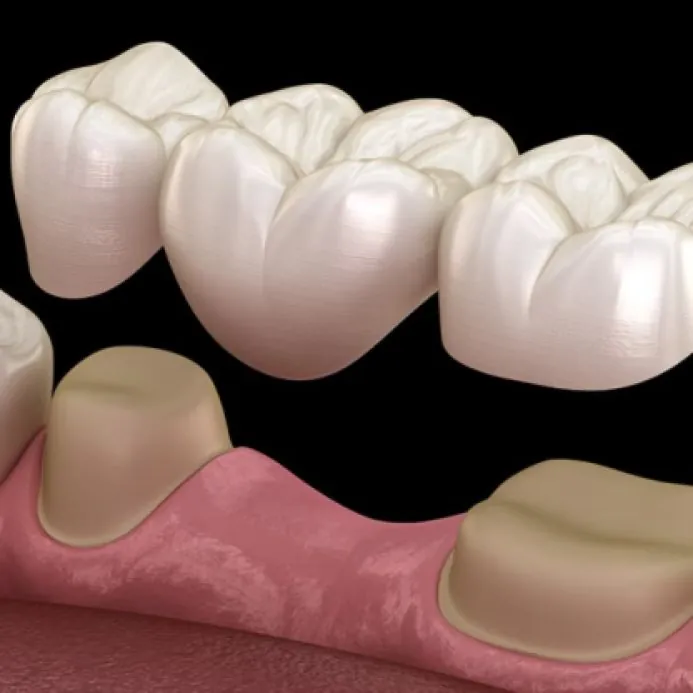
A made-to-measure cap that covers a weakened, fractured or root-filled tooth, or that is fixed on an implant.
Replace one or more missing teeth by resting on the neighbouring teeth, which each receive a crown, or on implants.
Replace several teeth, or all the teeth in one jaw, and come out for cleaning.
A removable denture that clips onto 2 to 4 dental implants, so it no longer moves when you eat.
All the teeth of one jaw on a bridge screwed onto 4 to 6 implants, which only the dentist can remove.
For mouths with many missing or damaged teeth: crowns, bridges, implants and dentures combined in one overall plan.
Every prosthesis is custom-made by a dental laboratory from your impressions.
Examination, X-rays and a discussion of the options; a treatment plan and a written quote.
Treatment of decay and gums, a root canal or extraction if needed and, sometimes, implant placement.
Conventional or digital impressions and shade selection; a temporary prosthesis protects or replaces the teeth in the meantime.
For removable dentures and larger work, one or more try-ins check the shape, shade and bite.
The crown or bridge is cemented, or the removable denture is handed over with advice on how to use it.
Adjustments in the following weeks, then regular check-ups every 6 to 12 months.
The choice depends on how many teeth are involved, the condition of the remaining teeth and the bone, and your preferences: fixed or removable, timing and budget. These are the most common options, always to be confirmed after an examination:
A fixed prosthesis (crown, bridge or full arch on implants) is cemented or screwed in and does not come out. It is the closest to natural teeth, both in comfort and for chewing. A removable denture comes out for cleaning and at night; it is simpler to make and less expensive, but needs a period of adjustment and can move, especially in the lower jaw.
In between, an implant-retained denture is a good compromise: it still comes out for cleaning, but clips onto the implants and stays put when you eat. To replace all your teeth with fixed teeth, see full-mouth restoration on implants.
A crown usually takes 2 visits, 1 to 2 weeks apart. A three-unit bridge is often made in 2 to 3 visits over two to three weeks. A complete removable denture needs several appointments (impressions, try-ins, fitting) over about 3 to 6 weeks. Prostheses on implants depend on how long the bone takes to heal, usually 3 to 6 months after the implants are placed.
The patient presented with multiple old, unaesthetic restorations showing marginal leakage, gum recession, and advanced deterioration of the prosthetic abutments. The existing metal crowns were both functionally and esthetically inadequate, and the gums showed signs of inflammation due to poor-fitting restorations.
The patient's smile was completely restored with natural, aligned restorations. Full chewing function was regained, and the patient left with renewed confidence in their appearance.
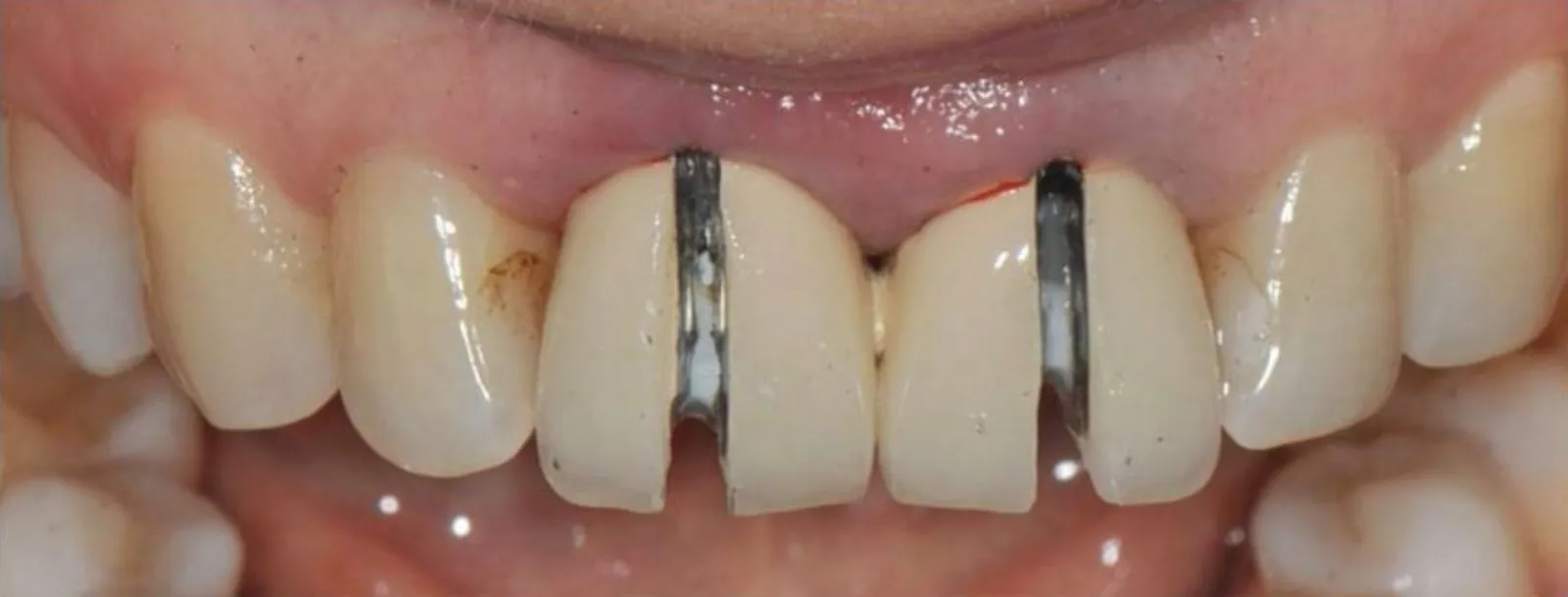
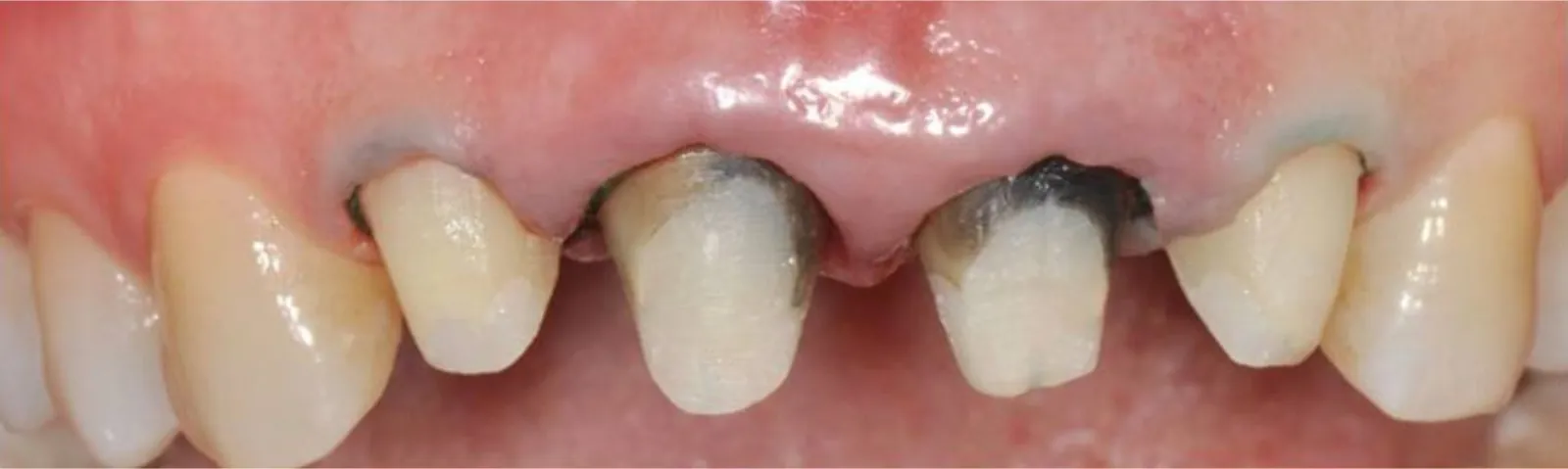

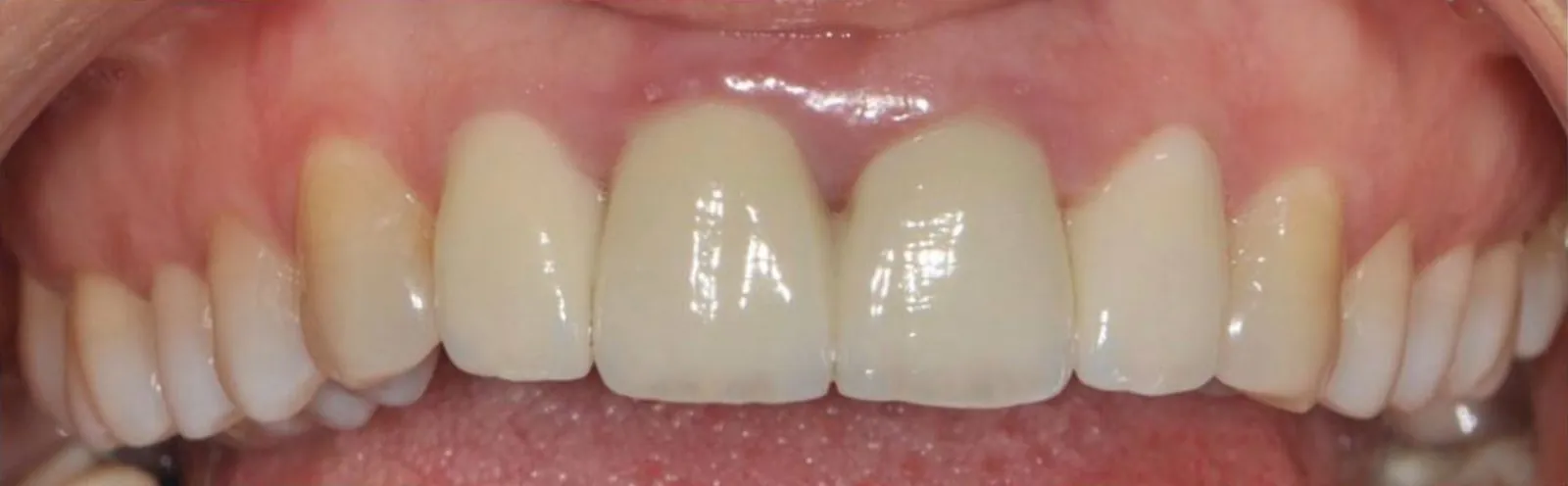
Fitting a crown or bridge is done under local anaesthetic and is not painful; some temporary sensitivity to hot and cold is possible for a few days. With a removable denture, it takes a few weeks to get used to speaking and chewing: small sore spots can appear and are fixed by adjustments at the practice.
As a guide, a well-maintained crown or bridge often lasts 10 to 15 years, sometimes longer. A removable denture is usually relined or replaced after 5 to 10 years, because the bone and gums change shape over time. The real lifespan depends on hygiene, check-ups and habits such as clenching your teeth.
A bridge on natural teeth means filing down the neighbouring teeth, which cannot be undone; if one of them weakens, the whole bridge is affected. A poorly fitting crown or insufficient hygiene can lead to decay at the edge or gum inflammation. An ill-fitting removable denture can cause sores and speed up bone loss. Regular check-ups pick up these problems early.
The cost of a prosthesis depends on the type of work, the number of teeth, the materials and the laboratory. As a benchmark for implant solutions, a complete single implant usually costs €1,000 to €2,500 in Belgium, and a full arch such as All-on-4 more than €10,000 per arch.
INAMI, the Belgian compulsory health insurance, contributes to some removable dentures under certain conditions, notably age; crowns, bridges and implants are generally reimbursed little or not at all, except in specific situations. A mutuelle, a supplementary dental plan or an international health policy may cover part of the cost. Dr Catarau is a non-contracted (non conventionné) dentist: his fees may be higher than the INAMI agreement rates; you receive an attestation de soins for reimbursable treatment.
Another question? The practice answers by phone, Monday to Friday.
A crown covers a single damaged tooth, or sits on an implant, to restore its shape and strength. A bridge replaces one or more missing teeth: it rests on the neighbouring teeth, which each receive a crown, or on implants. Both are fixed prostheses, custom-made by a dental laboratory.
Usually 2 visits, 1 to 2 weeks apart. At the first, the tooth is prepared under local anaesthetic, an impression is taken and a temporary crown is fitted. At the second, the final crown is tried in, adjusted and cemented. A badly damaged tooth may first need a core build-up or root canal treatment.
A well-maintained crown or bridge often lasts 10 to 15 years, and sometimes much longer. Its lifespan depends mainly on hygiene, especially cleaning under the bridge, regular check-ups and habits such as clenching or grinding. The most common reason for replacement is decay developing at the edge of the prosthesis.
Both are metal-free materials that are well tolerated by the gums. Zirconia is very strong and well suited to molars and bridges; ceramic, which is more translucent, mimics enamel very well on front teeth. The two are often combined: a zirconia framework layered with ceramic. The choice depends on the tooth, your bite force and the look you want.
If the neighbouring teeth are healthy, an implant is often the better choice, because they do not need to be filed down and the bone is better preserved. If they already have large fillings or crowns, a bridge can be a good option, quicker and without surgery. The bone, your general health and your budget also count; the choice is made together at the consultation.
Usually a few weeks, often 2 to 6, to get used to speaking and chewing with a new removable denture. At first you produce more saliva, some sounds are harder to say and small sore spots can appear; they are fixed with adjustments at the practice. Start with soft food cut into small pieces, then widen your diet gradually.
With a crown, a bridge or fixed teeth on implants, you eat almost normally once you have adjusted. With a removable denture, start with soft food cut into small pieces, chewing on both sides, then reintroduce firmer food. Very hard or sticky food, such as toffee, is still best kept to a minimum.
Yes, in most cases. A loose denture can first be relined, that is, refitted to the current shape of the gums. For a much better hold, especially in the lower jaw, 2 to 4 implants can be placed so the denture clips onto them: it still comes out for cleaning, but no longer moves when you eat or speak.
Partly, depending on the type. INAMI contributes to some removable dentures under certain conditions, notably age. Crowns, bridges and implants are generally reimbursed little or not at all by compulsory insurance, except in specific situations, but a mutuelle, supplementary dental plan or international policy may cover part. The practice's written quote lets you ask your insurer for the exact amount.
A removable denture usually lasts 5 to 10 years. Over time, the bone and gums change: the denture becomes less stable and then needs to be relined or remade. A yearly check-up makes it possible to check the fit and the wear of the denture teeth, and to avoid sore spots and faster bone loss.
The most common prosthetic treatments, each explained in detail on its own page.
Dr Denis Catarau sees patients at the Cabinet dentaire Detaille, Rue des Champs 64 in Etterbeek, for a prosthetic assessment: examination, X-rays, options and a written quote. Whether it is a crown, a bridge, a loose denture or an implant project, book an appointment to talk it through.