Composite bonding in Brussels: a better smile in one visit
Composite bonding means adding tooth-coloured composite resin to a tooth and sculpting it directly in the mouth to repair a chipped corner, close a small gap or lengthen a worn tooth. It is usually done in a single visit, without anaesthetic and without drilling. Dr Denis Catarau offers composite bonding at his practice in Etterbeek.
Written and reviewed by Dr Denis Catarau, dentist in EtterbeekUpdated: October 2026
- Visits
- 1, sometimes 2
- Chair time
- about 30-60 min per tooth
- Anaesthetic
- rarely needed
- Lifespan
- about 5-7 years with maintenance
What is composite bonding?
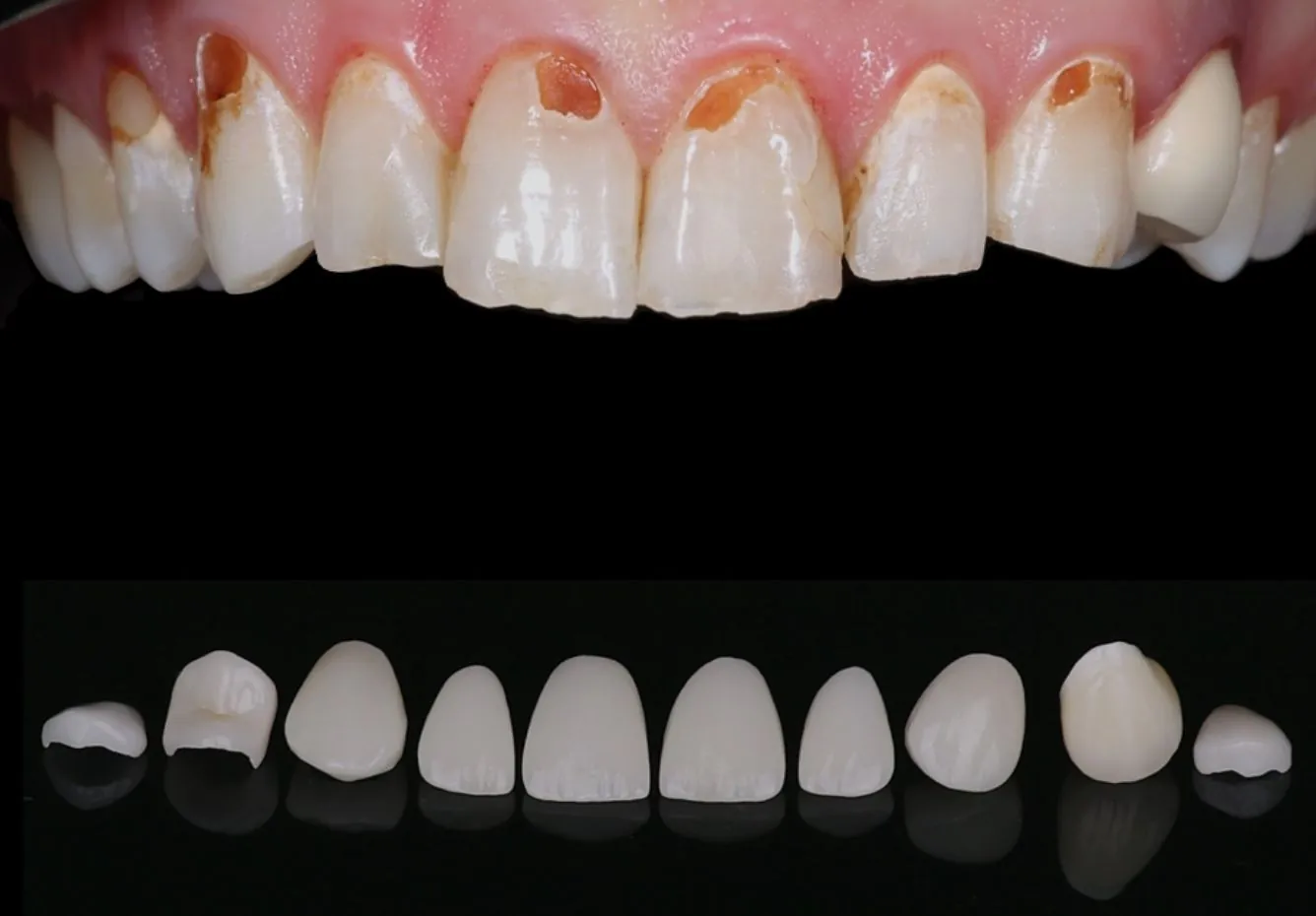
Composite bonding, also called dental bonding or edge bonding, is an additive technique: material is added rather than removed. The enamel surface is simply conditioned with a gel so the resin can adhere, then the composite is built up layer by layer, sculpted, hardened with a curing light and polished. No impressions and no laboratory are involved.
When composite covers the whole visible face of a tooth, it is called a composite veneer. The principle is the same; only the extent of the correction changes.
- A chipped or broken edge
- Small gaps between the teeth (diastema)
- Teeth that are worn or shortened by age or grinding
- Slight differences in shape or length
- Small enamel defects, such as some white spots
Composite bonding or porcelain veneers?
Both improve the shape and colour of teeth, but they meet different needs. Bonding is ideal for targeted corrections and for people who want to keep as much of their natural teeth as possible. Porcelain veneers are better suited to a lasting change across several teeth, especially when the colour needs to change.
- Composite bonding: one visit, little or no preparation, repairable, about 5-7 years, can stain over time
- Porcelain veneer: 2-3 visits, light enamel preparation, made in a laboratory, 10-15 years and often longer, stable colour
- Bonding costs considerably less per tooth than porcelain
A conservative, reversible treatment
Because the enamel is not drilled, composite can be touched up, redone or removed later, for example if you decide to move to porcelain veneers. That is a real advantage if you are unsure, or if your wishes change over time.
Composite does not whiten. If you want lighter teeth, whitening comes first; you then wait about two weeks for the shade to settle and for bonding strength to return to normal, and the composite shade is matched to the new result.
Lifespan, care and limitations
As general guidance, composite bonding lasts about 5 to 7 years with good care. It can dull with coffee, tea, red wine or smoking, and can chip under heavy force. Polishing at your check-ups restores the shine, and a small chip can usually be repaired simply.
Bonding is not the answer to everything. Lightening all your teeth is better done with whitening or porcelain veneers, significant crowding with orthodontics, and a badly broken-down tooth may need a crown. If you grind your teeth, a night guard is recommended.
What happens during composite bonding
- 1
Consultation
An examination, photos and a conversation about what you want to change. If you would also like whitening, it is planned first. You receive a written quote.
- 2
Shade selection and preparation
The shade is chosen on your teeth before they dry out. The surface is cleaned and conditioned with a gel, with no drilling in the vast majority of cases.
- 3
Layer-by-layer sculpting
The composite is applied and shaped in layers, each one light-cured. For several teeth, a guide based on the smile design can help reproduce the planned shape.
- 4
Finishing, polishing and review
Your bite is checked, then the composite is polished for a natural finish. You leave with the result the same day, and a review follows a few weeks later.
How much does composite bonding cost in Belgium?
The cost depends on the number of teeth and the size of the correction: repairing a chipped corner takes less time than covering the whole face of a tooth.
- Full composite veneer (per tooth)
- around €250-€500
- Small correction (corner, edge)
- usually less than a full veneer
- Purely cosmetic correction
- not reimbursed by INAMI
- Repairing a broken or decayed tooth
- may partly fall under the INAMI fee schedule
These figures are a general guide to the Belgian market, not the practice’s fees. Dr Catarau is a non-contracted (non-conventionné) dentist: the price is set out in a quote after consultation.
Frequently asked questions about composite bonding
Another question? The practice answers by phone, Monday to Friday.
What is composite bonding?
Composite bonding is the addition of tooth-coloured composite resin, sculpted and hardened directly in the mouth, to correct a chipped corner, a small gap, a short tooth or a slight asymmetry. It is usually done in one visit, without drilling the enamel or taking impressions, and it can be adjusted later.
How much does composite bonding cost in Belgium?
In Belgium, a full composite veneer generally costs between €250 and €500 per tooth; a small correction, such as a chipped corner, usually costs less. The purely cosmetic part is not reimbursed by INAMI. At the practice in Etterbeek, the exact price is given in a quote after consultation, depending on the number of teeth.
How long does composite bonding last?
Composite bonding generally lasts about 5 to 7 years, provided it is well maintained and polished at check-ups. Its lifespan depends on hygiene, diet and habits: nail biting, chewing on objects or grinding shortens it. It can be repaired or redone without removing any more tooth.
Does composite bonding damage your teeth?
No, in the vast majority of cases composite bonding does not damage the teeth: the enamel is not drilled, only conditioned on the surface so the resin can adhere. That is why it is considered reversible; it can be removed or replaced later. Good oral hygiene is still essential to avoid decay at the edge of the composite.
Composite bonding or veneers: which is better?
Composite bonding is the right choice for targeted corrections and a smaller budget, in one visit and without preparing the tooth. Porcelain veneers are better for a lasting change to the shape and especially the colour of several teeth, with a stable result for 10 to 15 years. The consultation is where you decide, based on your teeth and expectations.
Does composite bonding hurt?
No, composite bonding is generally painless. Because the tooth is not drilled, anaesthetic is rarely needed; it may be offered if an old filling or some decay has to be removed first. The only usual discomfort is keeping your mouth open during the session.
Does composite bonding stain?
Yes, composite can dull over time, faster than enamel or porcelain, especially with coffee, tea, red wine or smoking. Polishing at regular check-ups usually restores its shine. Rinsing with water after these drinks and not smoking help keep the colour stable.
Can I whiten my teeth after composite bonding?
You can whiten your natural teeth, but the composite will not lighten and will then look darker. That is why whitening is ideally done before bonding, with a wait of about two weeks before the composite is placed. If whitening comes afterwards, the composite often needs to be redone to get an even shade.
Is composite bonding covered by insurance in Belgium?
Cosmetic composite bonding is not reimbursed by INAMI. Some mutuelles and private dental insurers contribute to cosmetic treatment, with annual ceilings and sometimes a waiting period, so it is worth checking your own policy. When bonding repairs a broken or decayed tooth, part of the treatment may be reimbursed.
Related treatments
Treatments that are often considered together.
A chipped tooth or a small gap? Let’s talk
Dr Denis Catarau will see you at the practice in Etterbeek, examine your teeth and tell you whether composite bonding is the right solution or whether another option would suit you better. You leave with a clear plan and a quote.